Blog
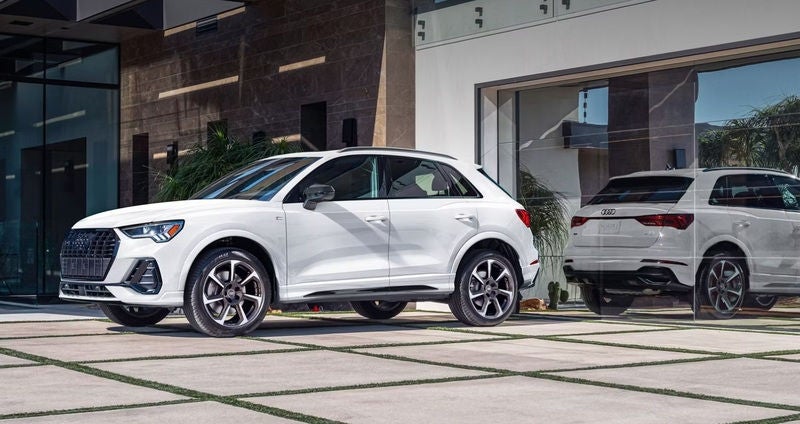
Audi Q3 SUV: What Child Car Seat Options Fit Best?
If you’re trying to find the right child car seat for an Audi Q3 in Canada, you’re likely looking for something that fits properly, installs securely, and works well with the vehicle’s interior space. This question often comes up because compact luxury SUVs like the Audi Q3 have specific dimensions that can influence compatibility with different car seat types.
How Child Seat Installation Works In The Audi Q3
The Audi Q3 available in Canada has standard child seat anchoring systems designed to support safe installation.
These include:
ISOFIX/LATCH anchor points in the rear seats
Top tether anchors for forward-facing seats
Standard seat belts for additional installation methods
The rear seating area is the primary location for installing child seats. The Q3 layout typically supports installation in:
Rear outboard seats (left and right)
Rear center seat (depending on seat type and installation method)
Types Of Child Car Seats And How They Fit In The Audi Q3
Choosing the right option depends on the child’s size and the seat’s dimensions relative to the Q3 interior.
Rear-facing infant seats
These are designed for newborns and smaller children.
Fit characteristics in the Audi Q3:
Generally compatible with rear outboard positions
May require adjusting the front seat forward to create space
Base installation using ISOFIX/LATCH is typically supported
Rear-facing seats tend to take up more front-to-back space, which is an important consideration in a compact SUV like the Q3.
Convertible car seats
You can use convertible seats in both rear-facing and forward-facing configurations.
Fit characteristics:
Rear-facing mode may require more cabin space
Forward-facing mode is usually easier to accommodate
ISOFIX/LATCH and top tether anchors are used depending on orientation
These seats are often larger and heavier, so checking dimensions relative to the Q3 rear seating space is important.
Forward-facing seats
These are for older children who have outgrown rear-facing positions.
Fit characteristics:
Typically fit well in both rear outboard seats
Use of top tether anchors improves stability
Require less front-to-back space than rear-facing seats
Booster seats
Booster seats position the child so that the vehicle’s seat belt fits correctly.
Fit characteristics:
Usually fit easily in the Audi Q3
Work well with the vehicle’s rear seat contours
Do not require ISOFIX/LATCH in all cases, depending on design
Factors That Affect Fit In The Audi Q3
Several elements influence how well a child car seat fits in this vehicle.
Rear seat space
The Audi Q3 is a compact SUV, so rear legroom and seat depth are more limited compared to larger vehicles. This affects:
Rear-facing seat clearance
Ability to install multiple seats side by side
Seat shape and angle
The contour of the rear seats can influence how securely a child seat sits in place. Some seats may require adjustment to achieve a proper angle.
Front seat position
When using a rear-facing seat, the front passenger seat may need to be moved forward slightly to allow proper clearance.
Number of seats installed
Installing more than one child seat at the same time may require careful positioning, especially in the center seat.
Step-By-Step: How To Check If A Car Seat Fits Properly
If you’re evaluating whether a child car seat works well in your Audi Q3, you can follow these basic steps.
1. Position the seat in the rear
Place the car seat in the desired seating position (usually the rear outboard position).
2. Align with anchor points
Locate the ISOFIX/LATCH anchors or prepare the seat belt for installation.
3. Secure the seat
Attach the connectors or seat belt and tighten according to the seat’s instructions.
4. Check stability
The seat should remain firmly in place with minimal movement once installed.
5. Verify clearance
Ensure there is enough space between:
The child seat and front seats
The child seat and vehicle interior surfaces
6. Confirm angle and positioning
Rear-facing seats should be installed at the correct angle for safety and comfort.
What To Check And What To Expect
Normal expectations:
Secure installation using ISOFIX/LATCH or seat belt
Adequate clearance for front passengers
Stable positioning with minimal movement
What may vary:
Fit depending on car seat size and design
Space available for multiple seats
Ease of installation based on seat type
When additional attention may be needed:
Difficulty achieving a secure installation
Limited space for rear-facing configurations
Uncertainty about anchor point usage
Compatibility In The Audi Q3
The Audi Q3 supports child seat installation according to Canadian safety standards. However, due to its size and interior layout, compatibility depends more on the dimensions of the specific car seat than on the vehicle itself.
This means:
Many child seats will fit, but not all will fit equally well
Compact or space-efficient designs may be easier to install
Testing fit before long-term use is helpful
Stay Safe in Your Audi Q3
To answer the question, the best child car seat options for an Audi Q3 are those that fit securely in the rear seating area and can be properly installed using ISOFIX/LATCH or seat belts. Rear-facing, forward-facing, and booster seats can all be used, but space considerations—especially for rear-facing models—play an important role.
Checking fit, ensuring proper installation, and confirming clearance are key steps in selecting the right option. If you want confirmation for your specific Audi Q3 configuration or assistance with installation, visiting an official Audi dealership can help ensure everything is set up correctly.
*Disclaimer: Content contained in this post is for informational purposes only and may include features and options from US or internacional models. Please contact the dealership for more information or to confirm vehicle, feature availability.*
*Disclaimer: Content contained in this post is for informational purposes only and may include features and options from US or internacional models. Please contact the dealership for more information or to confirm vehicle, feature availability.*