Blog
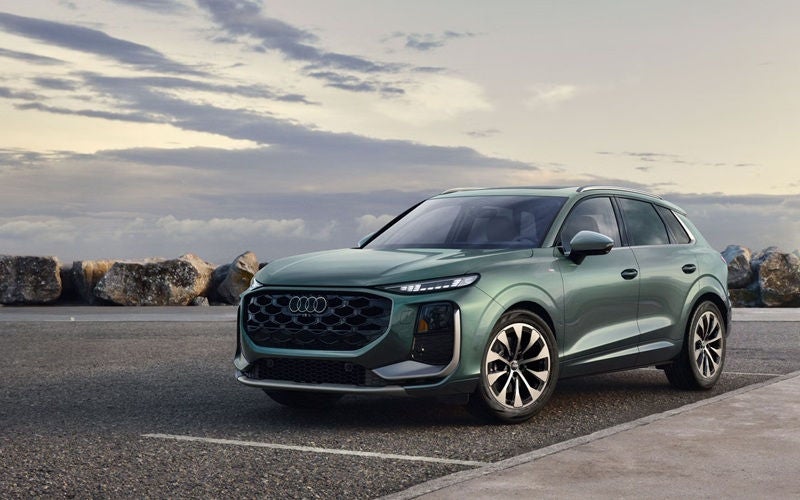
2026 Audi Q3 Luxury SUV: What Engines Are Available?
The compact luxury SUV segment continues to evolve as manufacturers refine powertrains to balance performance, efficiency, and emissions standards. The Audi Q3 has long occupied an important position within this category, offering a blend of practicality, modern technology, and dynamic driving characteristics in a relatively compact footprint. As the automotive industry transitions toward electrification while still maintaining highly optimized internal combustion engines, the available powertrain options for vehicles like the Audi Q3 become an important topic for buyers and enthusiasts alike.
The new Audi Q3 continues this trend by offering a range of engines designed to serve different priorities, including efficiency, responsive acceleration, and improved emissions performance. Advances in turbocharging, direct fuel injection, and mild hybrid technology have enabled modern engines to deliver greater power while consuming less fuel than earlier generations.
Understanding the engine lineup involves more than simply listing displacement and horsepower. It also requires examining how Audi integrates turbocharging, hybrid assistance, transmission systems, and drivetrain layouts to optimize performance and efficiency. In addition, modern engine architectures are tightly connected to vehicle electronics, thermal management systems, and emission-control technologies.
Engine Architecture in the 2026 Audi Q3
2.0-Litre TFSI Turbocharged Four-Cylinder
The core engine used in the Audi Q3 lineup is based on the Audi 2.0-litre TFSI turbocharged inline four-cylinder architecture. This engine belongs to the Volkswagen Group’s EA888 engine family, which has undergone several generations of refinement focused on improving efficiency, durability, and emissions performance.
The engine uses a displacement of approximately 1,984 cubic centimetres and features a four-cylinder inline configuration with dual overhead camshafts and four valves per cylinder. This setup allows for precise airflow management and efficient combustion.
A key characteristic of the TFSI engine is the use of turbocharging combined with direct fuel injection. The turbocharger compresses incoming air before it enters the combustion chamber, allowing more oxygen to be packed into each cylinder. This increases combustion efficiency and enables the engine to produce more power without increasing displacement.
Direct fuel injection sprays fuel directly into the combustion chamber at high pressure. This allows for more precise control of the air-fuel mixture, which improves both power output and fuel efficiency.
Variable Valve Timing
The engine also incorporates variable valve timing systems that allow the intake and exhaust valves to open and close at different times depending on engine speed and load.
At low engine speeds, the system prioritizes efficiency and smooth operation by adjusting valve timing to improve combustion stability. At higher speeds, the valve timing changes to maximize airflow into the cylinders, enabling stronger power delivery.
This flexibility helps the engine perform efficiently across a wide range of driving conditions.
Power Output Variants
Standard Output Configuration
In its standard configuration, the 2.0-litre TFSI engine produces a moderate level of power suitable for everyday driving conditions. This version emphasizes balanced performance and efficiency, delivering responsive acceleration while maintaining relatively low fuel consumption.
The engine’s torque curve delivers strong pulling power at low engine speeds, largely thanks to the turbocharger. Maximum torque is typically available at relatively low revolutions per minute, which improves drivability in city traffic and during highway merging.
Higher Output Configuration
Some versions of the Audi Q3 may offer a higher-output variant of the same 2.0-litre engine. This configuration uses increased turbocharger boost pressure and revised engine calibration to deliver greater power and torque.
Despite the increased output, the engine maintains the same basic architecture. The improvements come primarily from software optimization, turbocharger performance tuning, and improved thermal management.
These changes allow the higher-output version to deliver stronger acceleration while maintaining durability and efficiency.
Turbocharging System
Single Turbocharger Design
The turbocharger used in the Audi Q3 engine balances rapid response with sustained performance. Exhaust gases exiting the engine spin a turbine wheel inside the turbocharger housing. This turbine is connected to a compressor wheel that draws in and compresses fresh air before sending it to the engine’s intake system.
The increased air density allows the engine to burn more fuel during combustion, resulting in higher power output.
Intercooler Function
When the turbocharger compresses air, its temperature increases. Hot air is less dense, which reduces the amount of oxygen available for combustion. To address this, the compressed air passes through an intercooler before entering the engine.
The intercooler lowers the air temperature, increasing its density and improving combustion efficiency. This process enhances both engine performance and fuel efficiency.
Mild Hybrid Technology
48-Volt Electrical System
Some configurations of the Audi Q3 may include a mild hybrid system built around a 48-volt electrical architecture. This system supplements the internal combustion engine with a small electric motor integrated into the drivetrain.
The motor can provide brief bursts of additional torque during acceleration, helping the engine operate more efficiently.
Energy Recuperation
During braking and deceleration, the mild hybrid system recovers kinetic energy that would otherwise be lost as heat. It converts this energy into electricity and stores it in a compact battery.
The stored energy can later be used to assist the engine during acceleration or to power vehicle systems.
Engine Start-Stop Optimization
The mild hybrid system also enhances the start-stop function of the engine. Instead of relying solely on a traditional starter motor, the system can restart the engine quickly and smoothly using the electric motor.
This reduces fuel consumption during urban driving, which involves frequent stops.
Transmission Integration
Dual-Clutch Transmission
The engines in the Audi Q3 are typically paired with a dual-clutch automatic transmission. This type of transmission uses two separate clutches—one for odd-numbered gears and one for even-numbered gears.
When the vehicle shifts gears, the next gear is already pre-selected by the transmission control unit. This allows gear changes to occur quickly and smoothly.
Efficiency Benefits
The dual-clutch system minimizes power loss during gear changes, improving both acceleration and fuel efficiency. The transmission’s electronic control system continuously evaluates throttle position, engine speed, and driving conditions to determine the optimal gear.
Drivetrain Configurations
Front-Wheel Drive
Some versions of the Audi Q3 use a front-wheel-drive configuration. In this setup, the engine sends power directly to the front wheels through the transmission and differential.
This layout reduces drivetrain complexity and can improve fuel efficiency.
Quattro All-Wheel Drive
Other variants may include the Audi quattro all-wheel-drive system. In this configuration, power can be distributed between the front and rear axles depending on road conditions and traction requirements.
Sensors monitor wheel slip, steering input, and vehicle dynamics to determine how much torque to deliver to each axle.
The system helps improve traction on slippery surfaces and enhances vehicle stability during cornering.
Emissions and Thermal Management
Exhaust After-Treatment Systems
Modern engines must comply with strict emissions standards. The Audi Q3 engine includes several systems designed to reduce harmful emissions.
These systems typically include a catalytic converter and a gasoline particulate filter. Together, they help reduce nitrogen oxides, hydrocarbons, and particulate emissions from the exhaust gases.
Thermal Management System
Efficient temperature control is critical for both engine performance and emissions reduction. The engine uses a sophisticated cooling system that regulates the temperature of the cylinder head, engine block, and turbocharger.
Maintaining optimal operating temperatures improves combustion efficiency and reduces wear on engine components.
Electronic Engine Management
Engine Control Unit
The engine is managed by an advanced engine control unit that monitors multiple sensors throughout the powertrain.
These sensors track variables such as air intake temperature, throttle position, turbocharger pressure, and engine speed. Using this data, the control unit adjusts fuel injection timing, ignition timing, and turbocharger operation.
Software Optimization
Engine performance today is heavily influenced by software calibration. Engineers use complex algorithms to balance power delivery, fuel efficiency, and emissions performance.
FAQ Section
What type of engines are available in the 2026 Audi Q3?
This SUV uses turbocharged four-cylinder petrol engines based on the 2.0-litre TFSI architecture, with power outputs varying by configuration.
Does the 2026 Audi Q3 use turbocharging?
Yes. The engines use a turbocharger that compresses incoming air to increase power output while maintaining relatively small engine displacement.
Is hybrid technology used in the 2026 Audi Q3?
Some versions may incorporate mild hybrid technology using a 48-volt electrical system that assists the engine and recovers energy during braking.
What transmission works with the engines in the 2026 Audi Q3?
A dual-clutch automatic transmission typically pairs with the engines to deliver fast, efficient gear changes.
Does the 2026 Audi Q3 offer all-wheel drive?
Yes. Certain configurations include the quattro all-wheel-drive system, which distributes power between the front and rear axles to improve traction and stability.
*Disclaimer: Content contained in this post is for informational purposes only and may include features and options from US or internacional models. Please contact the dealership for more information or to confirm vehicle, feature availability.*
*Disclaimer: Content contained in this post is for informational purposes only and may include features and options from US or internacional models. Please contact the dealership for more information or to confirm vehicle, feature availability.*