Blog
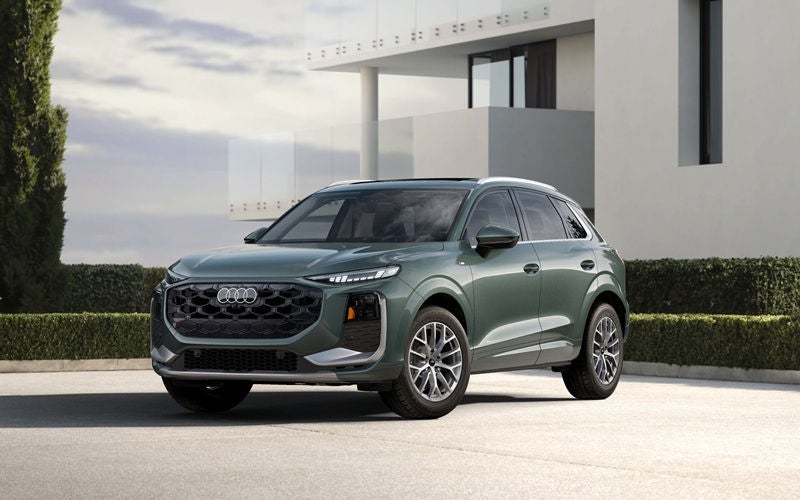
2026 Audi Q3 Luxury SUV: What Safety Systems Are Standard?
Vehicle safety has become one of the most important aspects of modern automotive engineering. Over the past two decades, safety systems have evolved from primarily passive protection features—such as seatbelts and airbags—to a complex network of active electronic systems designed to prevent accidents before they occur. These technologies rely on sensors, cameras, radar systems, and advanced software to monitor the driving environment and assist the driver in potentially dangerous situations.
Compact luxury SUVs like the Audi Q3 integrate a wide range of safety technologies into a relatively small platform. The objective is not only to protect occupants in a collision but also to reduce the likelihood of accidents through driver-assistance and stability systems. These systems constantly analyze vehicle behaviour, road conditions, and surrounding traffic to maintain control and avoid hazards.
The Audi Q3 incorporates both active and passive safety systems. Active safety systems help prevent accidents by assisting the driver with braking, steering, and awareness of surrounding vehicles. Passive safety systems focus on protecting occupants in the event of a collision through structural design and restraint technologies.
Active Safety Systems
Automatic Emergency Braking
Automatic emergency braking is one of the most important active safety technologies included in modern vehicles. The system monitors the road ahead using forward-facing cameras and radar sensors that detect other vehicles, pedestrians, or obstacles.
When the system determines that a collision risk is increasing and the driver has not applied sufficient braking force, it can automatically initiate braking. The goal is either to avoid the collision entirely or reduce the severity of the impact.
The system typically operates in multiple stages. First, visual and audible warnings alert the driver to the potential hazard. If the driver does not react quickly enough, the system may pre-charge the braking system and then apply full braking force if necessary.
Forward Collision Warning
Forward collision warning works together with automatic emergency braking. Using similar sensors, the system continuously measures the distance to objects ahead of the vehicle.
If the system detects that the distance is decreasing rapidly and the closing speed is too high, it issues a warning to the driver. This warning provides additional reaction time, allowing the driver to slow down or steer away from the obstacle.
The system calculates potential collision risk by analyzing vehicle speed, the relative motion of objects, and braking capability.
Lane Departure Warning
Lane departure warning helps prevent unintended drifting out of a traffic lane. A forward-facing camera mounted near the windshield monitors lane markings on the road surface.
If the system detects that the vehicle is moving toward the edge of the lane without the turn signal being activated, it alerts the driver. The warning may be delivered through visual indicators, steering wheel vibration, or audible alerts.
This technology is particularly useful during highway driving when driver fatigue can increase the likelihood of lane drifting.
Vehicle Stability and Traction Systems
Electronic Stability Control
Electronic stability control is a key safety system designed to maintain vehicle stability during sudden maneuvers or slippery conditions.
The system monitors multiple vehicle parameters, including steering angle, wheel speed, lateral acceleration, and yaw rate. If the system detects that the vehicle is beginning to slide or deviate from the driver’s intended direction, it can intervene automatically.
Intervention may include reducing engine power and applying braking force to individual wheels. These adjustments help restore the vehicle’s intended path and reduce the risk of loss of control.
Traction Control System
Traction control prevents excessive wheel spin during acceleration. When the system detects that one or more wheels are spinning faster than others, it determines that traction has been lost.
The system responds by reducing engine torque or applying braking to the slipping wheel. This allows torque to be transferred to the wheels, improving grip on the road surface.
Traction control is particularly useful when driving on wet pavement, snow, or loose gravel.
Anti-lock Braking System
The anti-lock braking system prevents the wheels from locking during heavy braking. Wheel lock can cause the driver to lose steering control because locked wheels slide across the road surface instead of rotating.
The system rapidly pulses the braking pressure at each wheel to maintain rotation while still slowing the vehicle. This allows the driver to continue steering while braking.
The anti-lock braking system works together with electronic stability control and traction control to maintain vehicle stability.
Driver Awareness Technologies
Driver Attention Monitoring
Driver attention monitoring systems analyze driving patterns to detect signs of fatigue or reduced concentration.
The system monitors steering inputs, vehicle movement within the lane, and driving duration. If irregular patterns suggesting fatigue are detected, the system can alert the driver to take a break.
These alerts typically appear on the vehicle’s instrument display along with audible notifications.
Rear Cross-Traffic Alert
Rear cross-traffic alert helps drivers detect vehicles approaching from the sides when reversing. Sensors located at the rear of the vehicle monitor areas that may not be visible in mirrors or on the rear camera.
If another vehicle approaches while the driver is reversing, the system issues a warning. In some cases, the system may also apply braking to prevent a collision.
This technology is particularly helpful when reversing out of parking spaces where visibility may be limited.
Passive Safety Systems
Airbag System
The Audi Q3 includes a comprehensive airbag system designed to protect occupants during a collision. Airbags deploy rapidly when sensors detect a significant impact.
Front airbags protect the driver and front passenger from head and chest injuries. Side airbags protect the torso, while curtain airbags extend along the sides of the cabin to protect occupants’ heads during side impacts or rollovers.
The deployment of airbags is controlled by a network of sensors that measure impact forces and determine which airbags should deploy.
Seatbelt Pretensioners
Seatbelt pretensioners enhance the effectiveness of seatbelts during a collision. When crash sensors detect an impact, the pretensioner mechanism instantly tightens the seatbelt.
This reduces slack in the belt and helps position the occupant properly before the full impact forces occur.
Proper occupant positioning allows airbags and other restraint systems to function more effectively.
Energy-Absorbing Vehicle Structure
The structural design of the vehicle plays a crucial role in protecting occupants. The body of the Audi Q3 uses reinforced steel structures that form a protective safety cage around the passenger compartment.
In the event of a collision, designated crumple zones at the front and rear of the vehicle deform in a controlled manner. This deformation absorbs kinetic energy from the impact, reducing the forces transmitted to occupants.
Engineers design these structures to manage crash energy while preserving the integrity of the passenger cabin.
Integrated Safety Control Systems
Central Safety Control Unit
Modern safety systems rely on a central electronic control unit that processes data from numerous sensors throughout the vehicle.
This control unit monitors wheel speeds, acceleration, steering angle, braking pressure, and other parameters. By analyzing this data in real time, it determines when safety systems should activate.
The coordination between sensors and electronic controls allows multiple safety systems to operate simultaneously when necessary.
Sensor Fusion Technology
Sensor fusion refers to the process of combining data from different types of sensors—such as cameras, radar units, and motion sensors—to create a more accurate understanding of the environment.
For example, radar sensors can measure distance and speed of objects ahead, while cameras can identify lane markings and detect pedestrians.
By combining these data sources, the vehicle can make more reliable decisions about when to activate safety systems.
Crash Prevention Strategy
Multi-Layer Safety Approach
The safety strategy used in the Audi Q3 can be described as a multi-layer system.
Awareness systems monitor the environment.
Driver assistance systems warn the driver of hazards.
Active systems intervene to avoid collisions.
Passive systems protect occupants if a collision occurs.
Each layer contributes to reducing risk and improving occupant protection.
Continuous System Monitoring
Safety systems operate continuously while the vehicle is in motion. Sensors and control units analyze driving conditions many times per second.
This constant monitoring ensures that the vehicle can react quickly to unexpected hazards.
2026 Audi Q3 FAQ Section
What safety systems come standard in the 2026 Audi Q3?
The vehicle typically includes automatic emergency braking, forward collision warning, lane departure warning, electronic stability control, traction control, multiple airbags, and driver monitoring systems.
How does automatic emergency braking work?
Sensors monitor the distance and speed of objects ahead. If a collision risk is detected and the driver does not react, the system can automatically apply the brakes.
What is the purpose of electronic stability control?
Electronic stability control helps prevent loss of vehicle control by adjusting engine power and applying brakes to individual wheels when the vehicle begins to slide.
Does the 2026 Audi Q3 monitor driver attention?
Yes. Driver attention monitoring analyzes driving behaviour and can alert the driver if signs of fatigue or reduced concentration are detected.
How do airbags protect passengers during a crash?
Airbags deploy rapidly when crash sensors detect a significant impact, providing cushioning that reduces the risk of head and chest injuries for occupants.
*Disclaimer: Content contained in this post is for informational purposes only and may include features and options from US or internacional models. Please contact the dealership for more information or to confirm vehicle, feature availability.*
*Disclaimer: Content contained in this post is for informational purposes only and may include features and options from US or internacional models. Please contact the dealership for more information or to confirm vehicle, feature availability.*